

April 24, 2026
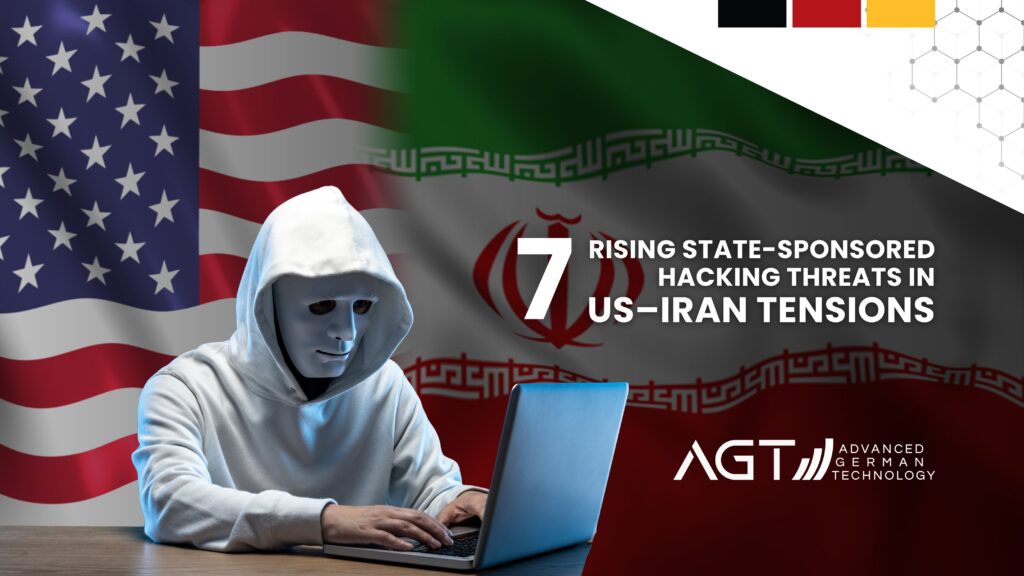
Cyberwar Escalation 2026: 7 Rising State-Sponsored Hacking Threats in US–Iran Tensions
In recent years, geopolitical tensions between major powers—particularly the United States and Iran—have increasingly extended into the digital domain. Cybersecurity analysts and global threat intelligence reports have highlighted a noticeable rise in state-sponsored cyber operations, targeting government institutions, financial systems, and critical infrastructure across the Middle East and beyond. Cyberwar Escalation 2026: 7 Rising State-Sponsored Hacking Threats in US–Iran Tensions
While physical conflicts and diplomatic tensions often dominate headlines, the cyber battlefield has become equally active. Financial institutions, telecom operators, and government entities in regions such as the Gulf Cooperation Council (GCC), including Saudi Arabia, have repeatedly been mentioned in cybersecurity advisories as potential targets of advanced persistent threat (APT) groups linked to geopolitical actors.
Rising Cyber Operations Amid Geopolitical Tensions
Recent global cybersecurity assessments indicate that periods of heightened political tension between the US and Iran are often accompanied by increased cyber activity. These operations typically include phishing campaigns, distributed denial-of-service (DDoS) attacks, data breaches, and ransomware intrusions.
Financial institutions are among the most targeted sectors due to their direct access to monetary systems and sensitive client data. In several publicly reported cases over recent years, attackers have attempted to disrupt banking services, exfiltrate customer information, and exploit vulnerabilities in legacy infrastructure systems.
In parallel, government-linked cybersecurity agencies have issued warnings about increased attempts to infiltrate critical infrastructure networks, including energy, telecommunications, and transportation systems. These attacks are often designed not only for financial gain but also for intelligence gathering and strategic disruption.
Financial Sector Under Continuous Pressure
Banks and fintech companies in the Middle East have faced a growing number of sophisticated cyber threats. Attackers frequently use social engineering techniques, credential harvesting, and supply chain compromises to gain unauthorized access to internal systems.
Once inside, threat actors may attempt to move laterally across networks, accessing sensitive financial data or customer records. In some incidents reported by cybersecurity firms, exposed data has included personal identification details, transaction histories, and internal operational documents.
The financial impact of such incidents is not limited to direct monetary loss. Reputational damage, regulatory penalties, and loss of customer trust often have longer-term consequences for affected institutions.

Data Breaches and Client Privacy Risks
One of the most concerning outcomes of modern cyber warfare is the exposure of personal and institutional data. Large-scale breaches can result in millions of records being compromised, creating risks of identity theft, fraud, and targeted phishing campaigns.
Attackers increasingly use stolen data to launch secondary attacks, impersonating trusted entities such as banks or government agencies. This evolution of cybercrime demonstrates how initial breaches often become the foundation for broader, more damaging campaigns.
As cyber operations continue to evolve, the line between criminal activity and state-sponsored intelligence gathering becomes increasingly blurred, making attribution and response more complex for security teams worldwide.
The Growing Need for Advanced Cyber Defense
The escalation of cyber threats linked to geopolitical tensions highlights the urgent need for robust cybersecurity frameworks. Organizations are now expected to adopt proactive defense strategies, including continuous monitoring, threat intelligence integration, and advanced incident response capabilities.
Governments and financial institutions are also investing heavily in digital resilience programs to ensure operational continuity during cyber incidents. However, technology alone is not sufficient—human expertise remains a critical factor in defending against sophisticated attacks.
How AGT Supports Cyber Resilience and Digital Defense
AGT (Advanced Global Technology) plays a key role in strengthening cybersecurity readiness for governments, financial entities, and critical infrastructure operators. Through its expertise in cybersecurity, digital transformation, and secure system design, AGT provides end-to-end solutions that help organizations prevent, detect, and respond to advanced cyber threats.
AGT supports organizations by designing and implementing highly secure IT environments, including resilient data centers built with modern security architecture principles. These infrastructures are engineered to withstand targeted cyberattacks while ensuring data availability, integrity, and confidentiality.
In addition, AGT provides specialized consultancy services to help institutions assess vulnerabilities, improve security posture, and align with international cybersecurity standards. This includes risk assessments, penetration testing, and strategic cyber defense planning tailored to each organization’s operational needs.
AGT Academy: Building Cybersecurity Expertise
Beyond technology and consultancy, AGT also invests in human capital development through AGT Academy, a dedicated training platform for cybersecurity professionals, government personnel, and homeland security teams.
AGT Academy offers specialized programs in cybersecurity operations, threat intelligence, and digital forensics. These programs are designed to equip professionals with the practical skills needed to identify, analyze, and respond to modern cyber threats effectively.
By bridging the gap between theory and real-world application, AGT Academy contributes to building a stronger cybersecurity workforce capable of defending critical national and financial systems.
Conclusion
As cyber threats continue to grow alongside geopolitical tensions, organizations must adopt a proactive and intelligence-driven approach to cybersecurity. The increasing sophistication of attacks targeting financial systems and government infrastructure demonstrates that cybersecurity is now a strategic necessity rather than an optional investment.
AGT remains committed to supporting governments and enterprises in building secure, resilient, and future-ready digital ecosystems.