

AI Agent Security: 7 Critical Risks Businesses Must Stop. AI Agent Security is rapidly becoming one of the most important cybersecurity priorities for organizations adopting artificial intelligence. Unlike traditional AI tools that mainly answer questions or generate content, AI agents can access corporate systems, retrieve sensitive information, connect to applications, execute commands, and make decisions with limited human intervention.
This growing autonomy creates major business opportunities, but it also introduces a new and potentially dangerous attack surface.
Recent cybersecurity research shows that threat actors are increasingly moving from simple AI-assisted activity toward more automated and agent-based workflows. As attackers become faster and more capable, organizations may have less time to detect and respond to malicious activity.
AI Agent Security Is Changing the Cyber Threat Landscape
Traditional cybersecurity was mainly designed around users, devices, applications, identities, and networks.
AI agents add another active digital identity into this environment.
An AI agent may connect simultaneously to email systems, cloud platforms, databases, CRM tools, APIs, internal documents, and other AI-powered systems. If an attacker manages to manipulate one of these connections, the impact can go far beyond a single compromised application.
The risk becomes even greater when AI agents are allowed to take actions automatically.
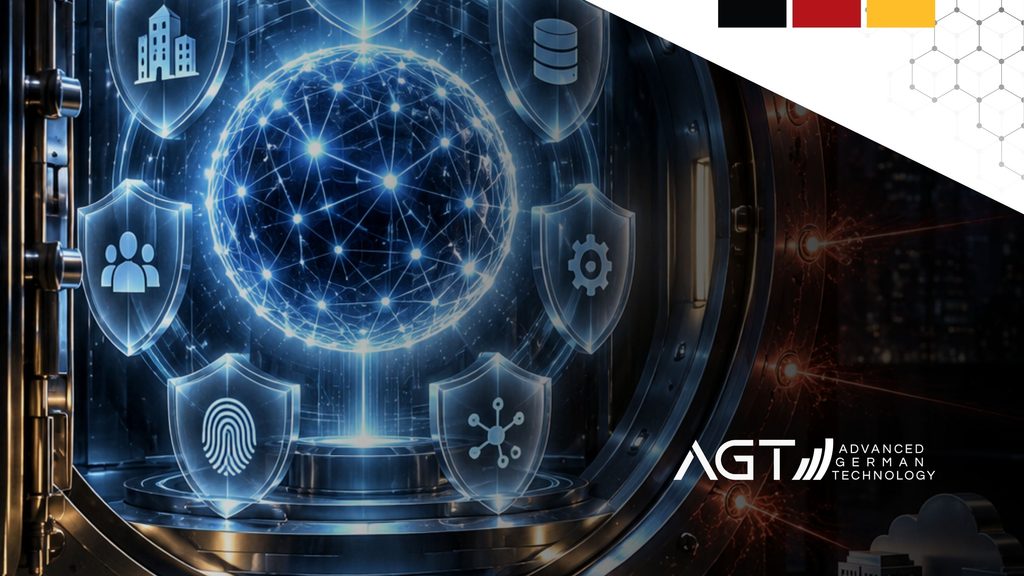
From Prompt Injection to Agent Hijacking
AI Agent Security: 7 Critical Risks Businesses Must Stop
Prompt injection remains one of the most widely discussed AI threats, but modern AI agent attacks can go much further.
Attackers may try to manipulate the instructions an agent receives, abuse connected tools, poison information sources, or exploit excessive system permissions.
This can lead to:
- Prompt Injection – malicious instructions designed to alter the agent’s intended behavior.
- Excessive Permissions – AI agents receiving more access than they actually require.
- Sensitive Data Leakage – confidential information being exposed through AI workflows.
- Agent Hijacking – attackers manipulating an AI agent into performing unauthorized actions.
- Tool and API Abuse – compromised integrations triggering unintended commands or transactions.
- Supply-Chain Attacks – malicious third-party tools, models, plugins, or data sources influencing the agent.
- Autonomous Attack Chains – multiple malicious actions being executed automatically before security teams can intervene.
How Organizations Can Protect AI Agents
AI agents should not be treated as simple productivity tools. They should be treated as privileged digital identities.
Organizations should apply strict security controls around every AI agent operating within their infrastructure.
Important measures include:
- Zero Trust and least-privilege access
- Dedicated identities for AI agents
- Continuous activity monitoring and logging
- Restricted access to sensitive systems
- Human approval for high-risk actions
- Validation of third-party tools and APIs
- Runtime detection of abnormal behavior
- Regular AI security assessments and penetration testing
Security teams should also maintain clear visibility over which agents are operating, what systems they can access, and which actions they are authorized to perform.
AI Agents Can Also Become Cyber Defenders
The same technology creating new cybersecurity risks can also strengthen cyber defense.
AI-powered security agents are increasingly being used to analyze large amounts of security data, detect suspicious activity, investigate vulnerabilities, and help security teams respond faster.
This is creating a new cybersecurity environment where both attackers and defenders can use artificial intelligence.
The challenge is therefore no longer only humans versus hackers.
It is increasingly becoming:
AI defending organizations against attackers who are also using AI.
Preparing for the Agentic AI Era
Organizations should not avoid AI because of cybersecurity risks.
Instead, security strategies must evolve together with AI adoption.
Every organization should understand which AI agents operate inside its environment, what information they can access, which tools they can control, and what permissions they have.
The fundamental principle remains simple:
Never give an identity — human, machine, or AI — more trust than it needs.
As AI agents become increasingly integrated into enterprise operations, AI Agent Security will become a critical part of cybersecurity, Zero Trust, identity protection, and enterprise risk management.
At AGT – Advanced German Technology, we help organizations strengthen their cybersecurity environments, identify emerging threats, and protect critical digital infrastructure against increasingly sophisticated cyber risks.