


7 Challenges Facing Digital Forensics Teams in 2025:
Cyberattacks today are bolder and more widespread than ever, targeting critical infrastructure, financial institutions, and even individuals. In this environment, digital forensics has become essential for understanding what happened and holding offenders accountable. Every email, financial transaction, or cloud file can either serve as a crucial piece of evidence or a missing thread that derails an investigation.
As attackers move quickly and develop new methods, digital forensics teams find themselves racing against time to handle increasingly complex challenges. Below are 7 Challenges Facing Digital Forensics Teams in 2025, and what it will take to deal with them effectively.
1- The surge in data volume and variety:
The amount of digital data investigators must handle has grown dramatically. It’s no longer just computers, now evidence can come from smartphones, cloud applications, social media, or even blockchain records. Sorting through all of this requires advanced tools that can filter, search, and analyze large datasets. Even with these tools, the real challenge is time. Delays in identifying and securing the right evidence can mean losing information that may never be recovered.
2- Cloud data and jurisdiction conflicts:
Because so many organizations now rely on cloud services, digital evidence often isn’t tied to one physical device. Instead, it’s spread across servers in multiple countries. This creates legal and jurisdictional hurdles: how can an investigator in one country legally access evidence stored in another? Solving this usually requires international agreements or fast-track legal processes, but even then, cloud providers often present data in different formats, making it harder to handle.
3- Encryption, privacy, and the debate over “lawful access”:
Encrypted messaging apps and secure storage make it nearly impossible to access data without keys. This sets up a clash between individual privacy rights and the need for law enforcement to obtain evidence in serious cases. Some governments have started introducing laws that require companies to provide ways of lawful access, but this remains controversial and raises difficult questions about balancing safety with freedom.
4- AI-generated content and deepfakes:
Deepfake technology has become a serious weapon for criminals, allowing them to create videos or audio recordings that are almost indistinguishable from reality. For investigators, this means developing methods to detect digital manipulation and verify authenticity at multiple levels. Beyond misleading investigations, deepfakes can also be used to blackmail victims or damage reputations.
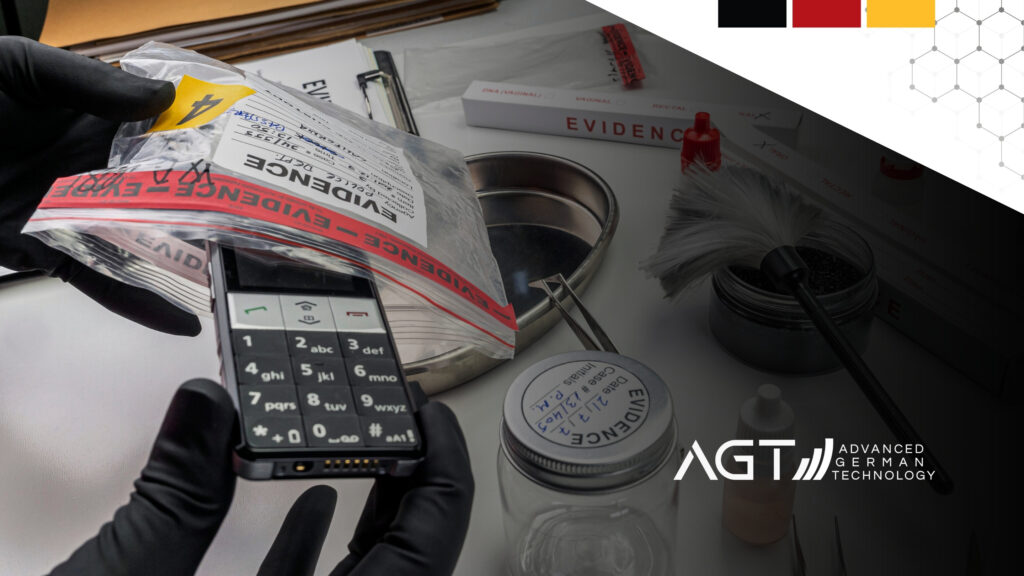
5- Mobile devices and the Internet of Things:
Smartphones now hold more evidence than traditional computers, including location data, messages, photos, and payment records. Add to that Internet of Things (IoT) devices, like home security cameras, medical wearables, or industrial controls, and investigators are faced with countless potential sources of evidence. The problem is that these devices often store only small amounts of data, which can disappear quickly. Speed becomes critical, and the wide variety of operating systems and platforms makes analysis even harder.
6- Cross-border cooperation and preserving evidence quickly:
Cybercrime rarely stays within one country. An attack might be carried out from one continent, target victims on another, and store its data in a third. This geographical spread makes collecting evidence difficult. Investigations are often slowed by lengthy legal processes to access data from foreign providers, during which critical information can be lost. Organizations like Interpol are working to speed up international cooperation, but stronger, more unified legal frameworks are still urgently needed.
7- Governance, lab accreditation, and consistent procedures:
For evidence to hold up in court, it must be collected and analyzed according to recognized international standards. Any break in the chain of custody can result in evidence being thrown out, no matter how strong it is. That’s why modern labs are seeking formal accreditation, adopting strict quality controls, and documenting every step thoroughly. Harmonizing procedures across countries and institutions is becoming essential to ensure fair investigations.
Why AGT Matters in 2025?
These seven challenges show that digital forensics is no longer just about technical skill. It’s a comprehensive process that demands speed, precision, legal credibility, and the ability to handle evidence scattered across different platforms and regions. This is where AGT stands out as a trusted partner in digital forensics.
What AGT offers?
- 24/7 incident response: Rapid-response teams to secure evidence right at the moment an attack happens.
- Comprehensive investigations: Covering cloud platforms, mobile devices, and IoT systems with advanced analysis tools.
- Deepfake detection: Technology to identify AI-generated or manipulated content and confirm authenticity.
- International standards compliance: Strict adherence to ISO/IEC 27037 and accredited lab practices.
- Expert reporting: Clear forensic reports designed to hold up in both national and international courts.
- Strategic partnerships: Working closely with law enforcement agencies and global service providers to speed up evidence gathering.
Whether you’re a bank, government agency, or private company, AGT provides the investigative support needed to respond to digital threats effectively and confidently.
Visit us at: https://www.agt-technology.com
Article Resources:
- https://www.europol.europa.eu/publication-events/main-reports/internet-organised-crime-threat-assessment-iocta-2024
- https://www.enisa.europa.eu/topics/cyber-threats/threat-landscape
- https://www.swgde.org/wp-content/uploads/2024/11/2024-11-22-Best-Practices-for-Remote-Collection-of-Digital-Evidence-from-an-Endpoint-22-F-003-2.0.pdf
- https://www.swgde.org/wp-content/uploads/2024/12/2024-12-06-Best-Practices-for-Internet-of-Things-Seizure-and-Analysis-23-F-003-1.0.pdf
- https://nvlpubs.nist.gov/nistpubs/specialpublications/nist.sp.800-101r1.pdf
- https://www.interpol.int/content/download/21048/file/24COM005030-AJFOC_Africa%20Cyberthreat%20Assessment%20Report_2024_complet_EN%20v4.pdf
- https://apnews.com/article/5b0cca725d17a028dd458df77a60440c
- https://apnews.com/article/057fee9214a008eb2829a672b10e69b0